How Often Should You Sealcoat a Commercial Parking Lot?
Every two to three years. That is the standard sealcoating interval for most commercial parking lots in the Kansas City metro area. If your lot sees heavy truck traffic, constant turning movements, or sits fully exposed to the sun, you may need to recoat closer to every two years. Lower-traffic lots in shaded areas can sometimes stretch to three. But the two-to-three-year rule is what we recommend to every property manager we work with, and it is the schedule that keeps asphalt in good shape for decades instead of falling apart in under ten.
At Platinum Paving, we have completed more than 530 commercial paving projects across the Kansas City metro. We have seen what happens when property owners stay on top of sealcoating, and we have seen what happens when they let it slide. The difference is not subtle. A well-maintained lot lasts 25 to 30 years. A neglected one starts cracking and crumbling in half that time.
What Does Sealcoating Actually Do for Your Parking Lot?
Sealcoating applies a protective layer over the surface of your asphalt that shields it from the elements. Think of it like a coat of armor. The sealant blocks ultraviolet rays from the sun, which break down the binder that holds asphalt together. It creates a moisture barrier that keeps rain, snowmelt, and standing water from seeping into the pavement and reaching the aggregate base underneath. It also fills in minor surface imperfections and restores that dark black appearance that makes a parking lot look well-maintained and professional.
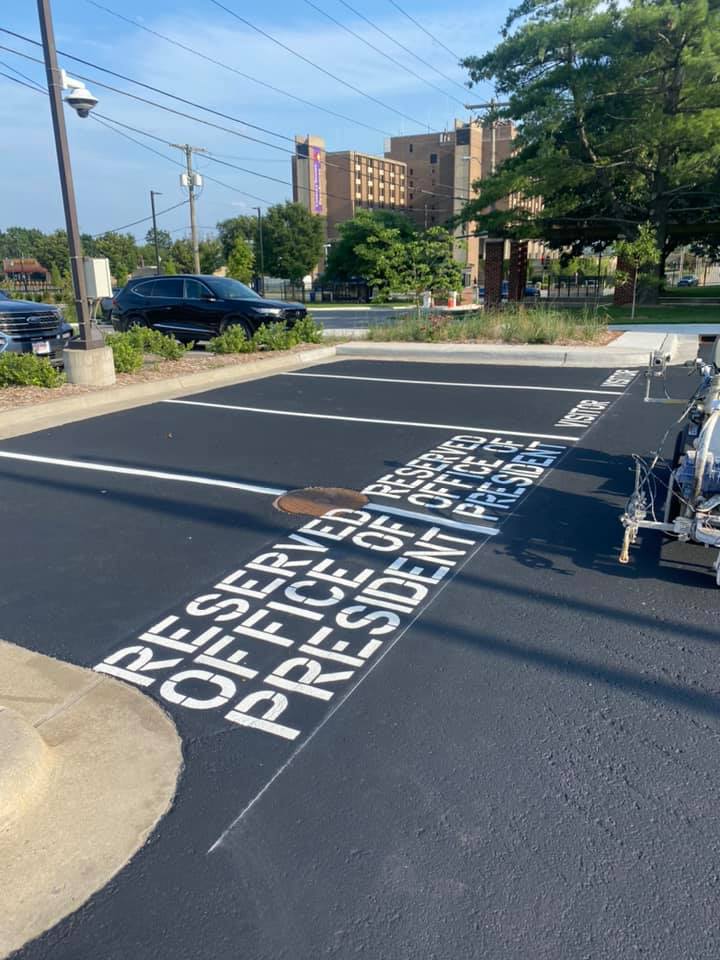
Beyond protection, sealcoating makes your lot easier to clean and maintain. Oil stains, fuel spills, and chemical runoff sit on top of the sealed surface instead of soaking into the asphalt. Dirt and debris sweep off more easily. Line striping shows up crisper and lasts longer on a freshly sealed surface. For property managers who care about curb appeal and tenant satisfaction, a fresh sealcoat is one of the highest-impact, lowest-cost improvements you can make.
What Signs Tell You It Is Time to Sealcoat?
Your parking lot will tell you when it needs attention. You do not need to be a paving expert to spot the signs. Here is what to look for:
- Faded color: Fresh asphalt is deep black. When it turns gray, the binder is oxidizing and the surface is losing its protective oils. Gray asphalt is unprotected asphalt.
- Small hairline cracks: If you see thin cracks forming across the surface, the pavement is drying out. Sealcoating now can prevent those cracks from spreading. Waiting turns a sealcoat job into a crack-sealing or repair job.
- Rough, brittle texture: Run your hand across the surface. If it feels gritty and loose aggregate is coming up, the top layer is deteriorating. A sealcoat locks that aggregate back in.
- Visible aggregate: When you can clearly see the small stones and gravel that make up the asphalt mix, the binder has worn away and the surface is exposed. This is past due for a sealcoat.
- Water sitting on the surface instead of beading: A well-sealed lot causes water to bead up and run off. When water just sits flat on the pavement and soaks in, the seal is gone.
If you spot any two of those signs, call us at (913) 701-6044 and we will come take a look. A quick visual assessment from our crew can tell you exactly where your lot stands and whether sealcoating now will save you money down the road.
Does Kansas City Weather Affect How Often You Need to Sealcoat?
Absolutely. Kansas City's climate is one of the toughest on asphalt in the Midwest. Hot summers push surface temperatures past 140 degrees, which accelerates UV damage and softens the binder. Then winter hits with freeze-thaw cycles that are brutal on pavement. Water seeps into small cracks during the day when temperatures rise above freezing, then expands as it freezes overnight. That expansion widens the cracks, and the cycle repeats dozens of times every winter.
KC also gets a solid amount of precipitation spread throughout the year, around 40 inches of rain plus snow and ice. All of that moisture is working against your asphalt surface. Add in road salt and de-icing chemicals that get tracked onto commercial lots from city streets, and you have a recipe for accelerated wear. This is exactly why the two-to-three-year sealcoating schedule matters so much here. In a milder climate, you might stretch it further. In Kansas City, you cannot afford to.
What Happens If You Skip Sealcoating Altogether?
Skipping sealcoating does not save you money. It costs you more. Here is the progression we see on neglected lots across the KC metro:
First, the surface oxidizes. The asphalt turns gray and the binder dries out over one to two years without a sealcoat. Then small cracks form. Those cracks let water penetrate below the surface. Water reaches the aggregate base and starts eroding it. In winter, freeze-thaw cycles widen those cracks into networks of interconnected damage. Now you have alligator cracking, potholes forming, and sections of pavement that are sinking because the base underneath has been compromised.
At that point, you are looking at asphalt repairs, patching, or possibly a full overlay or replacement. A sealcoat costs a fraction of what repairs cost. For a typical commercial parking lot in the Kansas City area, the cost difference between regular sealcoating every two to three years versus waiting until you need major repairs is significant. Property managers who budget for routine sealcoating almost always spend less on their parking lot over a 20-year period than those who take the reactive approach.
How Long Does a Fresh Sealcoat Last in the Kansas City Area?
A properly applied commercial sealcoat in the Kansas City metro typically lasts two to three years before the next application is needed. Several factors influence where your lot falls in that range. Traffic volume is the biggest factor. A retail shopping center lot with constant vehicle turning and parking will wear faster than an office park lot with steady but lower-impact traffic. Sun exposure matters, too. Lots with no tree cover or shade structures take more UV damage. The condition of the asphalt before sealing also plays a role. If cracks are properly filled and the surface is cleaned and prepped before the sealant goes down, the coating bonds better and lasts longer.
The quality of the sealant material and the application method matter as well. At Platinum Paving, we use commercial-grade coal tar or asphalt emulsion sealants applied at the proper thickness. We do not water them down to stretch material, and we do not cut corners on surface preparation. That is why our sealcoat jobs hold up through Kansas City summers and winters and look good doing it. All of our work is backed by a 1-year warranty on workmanship and materials.
When Is the Best Time of Year to Sealcoat in Kansas City?
Sealcoating requires air and surface temperatures of at least 50 degrees Fahrenheit, with no rain in the forecast for 24 to 48 hours after application. In the Kansas City area, that puts the prime sealcoating window from late March or early April through mid-November in most years. Spring and fall are the ideal times because temperatures are warm enough for proper curing without the extreme heat of July and August that can cause the sealant to dry too quickly on the surface before it bonds properly.
If you are planning a sealcoating project, the best approach is to schedule it in the spring before your lot takes another summer of UV punishment, or in the early fall before winter freeze-thaw cycles begin. We book sealcoating projects weeks in advance during peak season, so getting on the schedule early makes a real difference. If you are reading this during the winter months, now is the time to get your spring project locked in.
Ready to Protect Your Parking Lot?
If your commercial parking lot is looking gray, showing small cracks, or it has been more than two years since the last sealcoat, it is time to act. Sealcoating is one of the most cost-effective ways to extend the life of your pavement, and the Kansas City climate makes it non-negotiable if you want your lot to last.
Platinum Paving is a full-service commercial asphalt contractor serving the entire Kansas City metro. We handle everything from commercial sealcoating and crack sealing to new asphalt paving and line striping. One contractor for every parking lot need -- we install it, maintain it, and keep it compliant.
Call us at (913) 701-6044 or request a free estimate online. We will come out, assess your lot, and give you a straight answer on what it needs.