Asphalt vs. Concrete Parking Lots: Which Is Right for Your Kansas City Property?
If you manage a commercial property in the Kansas City metro, your parking lot is one of the first things tenants, customers, and visitors notice. It takes a beating year-round from traffic, weather, and heavy loads. So when it is time to build a new lot or replace an aging surface, the question comes up fast: asphalt or concrete? The answer depends on your budget, your property type, and how you plan to maintain the surface over the next 15 to 30 years. Here is a straight breakdown from a crew that installs and repairs both materials every week across the KC metro.
What Is Cheaper to Install -- Asphalt or Concrete?
Asphalt is almost always the more affordable option upfront for large commercial parking lots. The raw material costs less, the installation process is faster, and the equipment needed to lay and compact hot-mix asphalt is more efficient on big, open surfaces. For a property manager looking at a 50,000-square-foot parking lot in Overland Park or Independence, the difference in initial cost between asphalt and concrete can be significant enough to change the entire project scope.
Concrete carries a higher upfront price because the material itself costs more and the curing process takes longer. A concrete parking lot typically needs several days of cure time before it can handle traffic, which means more labor hours on site and a longer window where your lot is out of commission. For retail centers, apartment complexes, and warehouse facilities that cannot afford extended downtime, that timeline matters.
That said, cost per square foot only tells part of the story. Concrete's longer lifespan can offset that higher install price over 25 to 30 years. But if your priority is getting a solid, professional surface installed quickly and within a tighter budget, asphalt is the material most Kansas City commercial properties start with.
Which Material Holds Up Better in Kansas City's Freeze-Thaw Climate?
Both asphalt and concrete perform well when installed correctly, but they respond to Kansas City's harsh freeze-thaw cycles in very different ways. KC sits right in the middle of a climate zone that regularly swings from below freezing to 50 degrees and back within the same week during winter. That temperature swing is brutal on pavement.
Asphalt has a natural advantage here because it is a flexible material. When the ground underneath expands and contracts with freezing and thawing moisture, asphalt bends with it. That flexibility means fewer cracks from ground movement alone. When small cracks do appear, they are relatively easy and inexpensive to seal before they spread.
Concrete is rigid. It does not flex with ground movement, which means freeze-thaw cycles can cause cracking, spalling, and joint damage over time. Road salt and deicing chemicals -- which Kansas City properties use heavily from November through March -- can also accelerate concrete surface deterioration. Once a concrete slab cracks through, the repair is more involved and more expensive than filling an asphalt crack.
Neither material is immune to the weather here. But asphalt's flexibility gives it an edge in handling the constant temperature shifts that define a KC winter.
How Do Maintenance Needs Compare Between the Two?
Every parking lot surface needs maintenance. Ignoring it shortens the life of any material. But the type and frequency of maintenance differs between asphalt and concrete, and property managers should know what they are signing up for.
Asphalt parking lots should be sealcoated every two to three years. Sealcoating restores the dark, uniform appearance and protects the surface from UV damage, water penetration, and chemical spills like oil and gasoline. Crack sealing should happen annually or as cracks appear. With a consistent maintenance schedule, an asphalt lot can last 20 to 25 years before it needs a major overlay or full replacement.
Concrete parking lots need joint sealing to prevent water from getting beneath the slabs and causing erosion or frost heave. Concrete does not require sealcoating the way asphalt does, but it can stain from oil, tire marks, and deicing chemicals. Those stains are harder to remove from concrete than from a freshly sealcoated asphalt surface. When concrete does crack or spall, patching is possible but tends to be more noticeable and more costly than asphalt repair work.
Bottom line: asphalt maintenance is more frequent but less expensive per visit. Concrete maintenance is less frequent but more costly when something goes wrong.
Which One Looks More Professional for a Commercial Property?
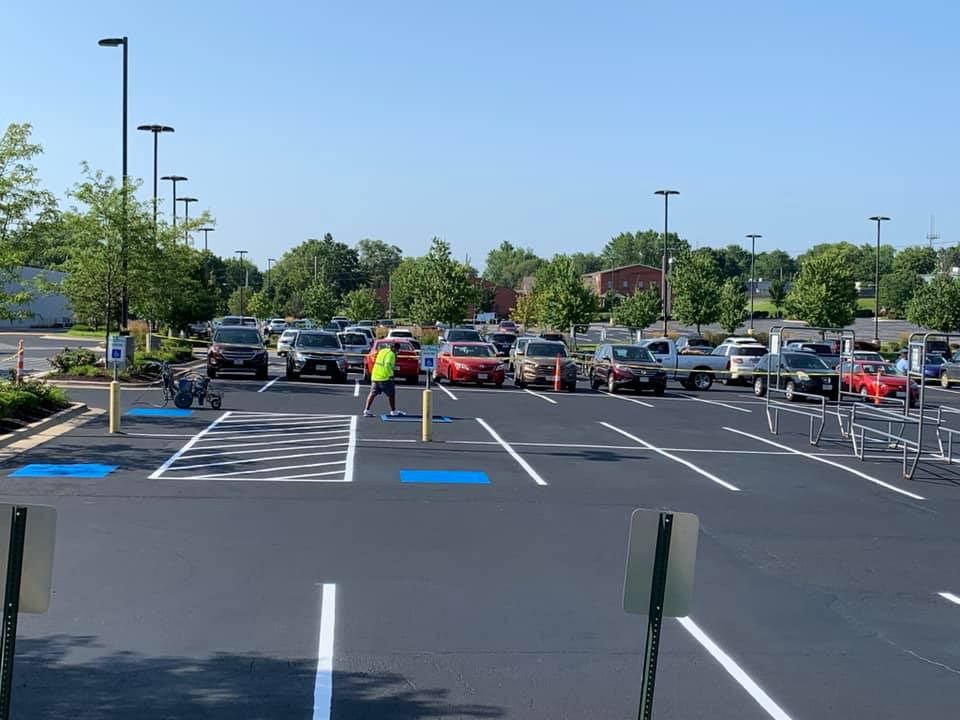
A freshly paved and striped asphalt parking lot looks clean, sharp, and professional. The dark surface provides high contrast with white and yellow line striping, making the lot easy to navigate and ADA-compliant markings easy to see. Most of the commercial parking lots you drive through every day in Lenexa, Lee's Summit, Shawnee, and across the KC metro are asphalt for exactly this reason.
Concrete offers a lighter, more finished appearance that works well for entryways, sidewalks, and smaller high-visibility areas. A concrete apron at the entrance to a retail center or a concrete loading dock at a warehouse facility gives a polished look that complements the darker asphalt lot behind it.
The most professional-looking commercial properties in Kansas City tend to use both materials strategically. Asphalt handles the large driving and parking surfaces where you need durability and cost efficiency. Concrete handles the curbs, gutters, sidewalks, ADA ramps, and accent areas where a cleaner finish matters. Together, they create a lot that looks intentional and well-maintained.
When Does Asphalt Make the Most Sense?
Asphalt is the go-to choice for large-area parking lots, drive lanes, and any surface where you need to cover a lot of ground efficiently. If you are paving a 200-space retail parking lot, an apartment complex lot, or a warehouse yard in Kansas City, asphalt gives you the best combination of cost, speed of installation, and long-term performance.
Asphalt also makes sense when you need to get the lot open to traffic quickly. A freshly paved asphalt surface can handle vehicles within 24 to 48 hours in most conditions. For businesses that cannot afford to close their lot for a week, that turnaround time is a major advantage.
Properties that experience heavy truck traffic -- like industrial parks, distribution centers, and loading areas -- also benefit from asphalt's ability to be milled down and resurfaced without a full tear-out. Asphalt overlays can add 10 to 15 years of life to an existing lot at a fraction of full replacement cost.
When Does Concrete Make the Most Sense?
Concrete is the better choice for areas that need to handle concentrated weight or provide a finished walking surface. Curbs and gutters, sidewalks, ADA-compliant ramps, loading docks, dumpster pads, and building aprons are all better served by concrete. These areas see foot traffic, point loads from dumpsters or equipment, and drainage requirements that concrete handles more effectively than asphalt.
Concrete is also required by code in many Kansas and Missouri municipalities for sidewalks and ADA ramp construction. If your property needs to meet accessibility standards -- and every commercial property does -- concrete ramps and walkways are not optional. They are required.
Why Do Most Kansas City Commercial Properties Use Both?
Walk through any well-maintained shopping center, office park, or apartment complex in the KC metro and you will see both materials working together. The parking lot itself is asphalt. The curbs, sidewalks, ramps, and entry aprons are concrete. This combination gives property owners the best of both worlds: the cost efficiency and flexibility of asphalt where you need coverage, and the strength and finish of concrete where you need precision.
The challenge for property managers has always been coordinating two separate contractors -- one for asphalt and one for concrete. That means two schedules, two bids, two crews on site, and twice the headaches when something does not line up. The joints where asphalt meets concrete are some of the most failure-prone areas in any parking lot, and if two different crews install them without coordinating, problems follow.
That is exactly why Platinum Paving handles both asphalt and concrete in-house. One contractor, one crew, one schedule. We install the asphalt lot, pour the concrete curbs and sidewalks, handle the ADA ramps, and stripe the lines -- all under one scope of work. No finger-pointing between contractors, no gaps in the schedule, and no seams where responsibility gets blurry. Our team of 11 has completed more than 530 projects across the Kansas City metro, and we back all workmanship and materials with a 1-year warranty.
If you are planning a new parking lot, resurfacing an existing one, or just trying to figure out whether your property needs asphalt work, concrete work, or both, give us a call at (913) 701-6044. We will walk the lot with you, tell you exactly what you need, and give you a straight estimate with no surprises. One contractor for every parking lot need -- that is how we work.